Showing posts with label Unit III. Show all posts

Wednesday, July 23, 2014

Unit III: From Monroe to Platt: The United States, Spain, and Cuba (3/1)

Corresponding text is found on p200-206 in Brief History of the Caribbean.

Unique qualities of Cuban geography give it tremendous agricultural potential
Cuba's fertile lands


Spain kept under tight wraps until 1760s when opened to foreign trade ships; subsequent sugar boom

Utilized best technological advances in sugar production from Jamaica and Haiti

Sugar becomes foundation of Cuba; replaces many cattle ranches, tobacco plantations, coffee estates
Focus on sugar drives expansion of railroads (to transport sugar to market) and expansion of slavery between 1770-1865
Slaves working sugar cane in Cuba

Railroads built to transport sugar cane

Slave numbers increase dramatically compared to white population but not ratio of other islands; why?

As sugar exporting colony, reliant on imports of finished goods
Unique relationship develops with United States (by 1877, 82% of exports to US, 6% to Spain)

By mid-1800's, Cubans developed resentment of Spanish government
- drained Cuban economy
- oppressive Spanish authorities
- abolition of slave trade (1820), 'underground' slave trade

Creole Cuban elite pitted against peninsulares

1865 - elite and planter class organize Reformist party to demand changes to Spanish rule
- reform of tariff system
- Cuban representation in Spanish parliament
- legal equality with peninsulares
- suppression of slave trade

Favorable initial response; new Spanish government in 1867 rejects and imposes harsher colonial rule
New leadership in Spanish government after Spain's Glorious Revolution

1868-1878 - Ten Years War (series of guerilla campaigns in east for independence)
The Ten Years' War
Pact of Zanjon (1878) ends conflict and promises constitutional and financial reforms

1880 - Spain abolishes slavery in Cuba; establishes patronato system to last years (ended 1886)

Promised political reforms never delivered

Economic problems of late 1800's - European sugar beet production, tariffs on cigars, coffee ruined by war
Number of total sugar mills drops by 40%; consolidation into fewer big sugar producers; many emigrants;
American capital begins to have increasing influence

After Ten Years War, Cuban separatists had been living in exile (many in New York); Cuban Junta
Jose Marti
Jose Marti - politician, poet, journalist, philosopher

The legendary poem

Propaganda promises a Cuban Republic free of racial and social inequality; Cuba Libre
Statue to Marti in Cuba

1895 - Marti helps lead new rebellion against Spanish; dies in early battle (Gomez, Maceo)
Poor vs Spanish elites
Rural vs Urban
Gomez banned sugar production and burned sugar crops

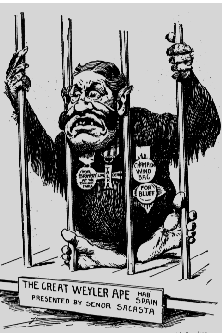
1896 - General Weyler arrives from Spain to defeat rebellion; forces many peasants into concentration camps; gains upper hand by late 1896; continued guerilla warfare and refusal of rebels to surrender
General Weyler
Weyler became the scorn of US political cartoonists

Jan 1898 - new Spanish govt recalls Weyler; gives Cuba autonomous government; Gomez rejects anything short of full independence; Spanish army officers riot in Havana in opposition to policy

Cuban Junta engages in propaganda war in US; yellow journalism; US business interest in Cuba
Cartoon depicting Spanish abuse of Cuba

Pres McKinley orders USS Maine to Havana to protect American lives and property; Feb 15 -explosion
Example of 'yellow journalism' following explosion on the Maine
April 11 - US Congress recognizes independent Cuba; Teller Amendment pledges no annexation
April 25 - US declares war on Spain
Spanish-American War lasts roughly 10 weeks; destruction of Spanish Pacific and Atlantic fleets
Dec 1898 - Treaty of Paris
- Cuba independent
- Puerto Rico & Guam to United States

US Congress est military govt over Cuba; disarm insurgents & loyalists; alleviate starvation and yellow fever; organize elections for assembly to write new Constitution

New Cuban Constitution had eight provisions stipulated by US Congress (Platt Amendment)
- Cuba would lease naval bases to US
- Cuba could make no treaties with foreign powers w/o US approval
- Cuba could not acquire debt it could not pay
- US could intervene when necessary to stabilize Cuban govt
Political commentary on the Platt Amendment

Constitution was adopted June 1901


Unit III: Banana Republics, Roosevelt's Canal, & Haiti Post-Independence (3/2)

The turn of the 20th Century saw beginning of the American vision of Latin America, and the Caribbean in particular, as part of the growing American sphere of influence. The American Empire if you will. Its the era of the Roosevelt Corollary to the Monroe Doctrine. The era of the American Lake.

Read this entry on United Fruit from Wikipedia. What does it tell you about United Fruit in general? About US foreign policy in the region? Does it amount to imperialism or not?


This 1950s short film reflects the spirit of the American view of the region.

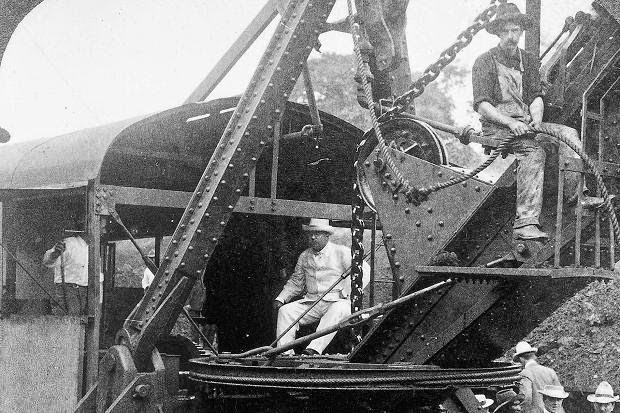
President Roosevelt and the Panama Canal


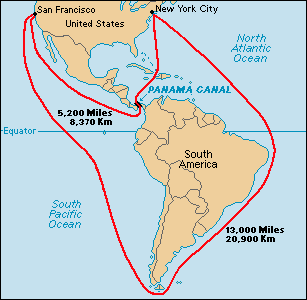
What drove Roosevelt to make the construction of the Panama Canal happen?

Background items
- French plan for more direct global navigation
- Panamanian independence movement from Colombia


Through the construction of the Panama Canal and the influence of American business in Central America, the United States in the early 20th Century developed an imperial presence in the Caribbean region. That presence was, in some ways, even more apparent elsewhere.

Haiti  (Corresponding text found on p216-222 and  p263-268 in Brief History of the Caribbean.)

After securing independence, Haiti was ruled my the iron-fisted Jean-Jacques Dessalines
State owned plantations (2/3 of total); forced labor on specific plantation enforced by military
Dessalines ruled as Emperor 1805-Oct 1806
Jean-Jacques Dessalines
Henri Christophe considered himself successor
New Constitution created powerful head of national assembly and powerless President
Assembly appoints Christophe President and Alexandre Petion head of National Assembly
Henri Christophe
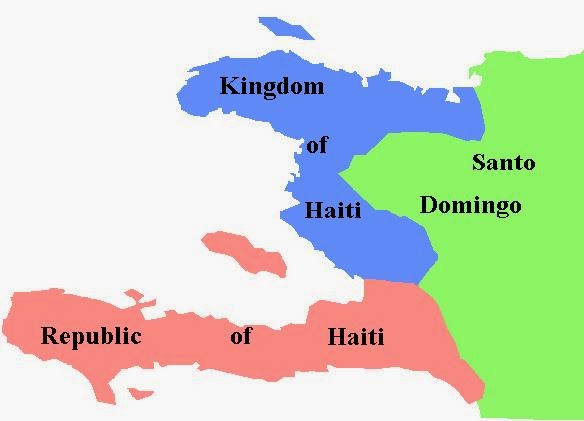
Clash of supporters and split - The Kingdom of the North and The Republic (1807-1820)
King Henri I - creates essentially feudal system; 'prosperous' due to export of agricultural goods
Brutal rule leads to revolt in 1820; King Henri shot himself at his mountain palace (w/ silver bullet?)
Christophe's Citadel
Petion's Republic further breaks up plantations into smaller units divided among the people
Free people refuse to grow cash crops; prefer subsistence farming
Agriculture (and government) revenues start to dry up but people love Petion

Petion succeeded by Jean-Pierre Boyer in 1818 as President for life ; reunites Haiti in 1820
1822 - Haitian forces invade and control Spanish Hispaniola until 1843 (relative peace & stability)
1825 - France recognizes independence in exchange for compensation of expropriated planters
Perennially bankrupt government invests nothing in infrastructure or education (Catholic schools don't show up until 1860)
Lack of formal, functional government institution; politics of personality and family

Haiti develops something of a caste system
- colored Haitians: political power, control commerce, live on coast
- black Haitians: control army, peasant farmers, rural interior

1843 - revolution against Boyer
Next 72 years saw 22 different Heads of State (note description of turmoil on p220-221)
Divide in Haiti grows between black/colored and north/south
Europeans come to dominate Haitian economy; French buy most coffee and half of exports; Germans companies control trade

(Note dynamics of Haitian/Dominican Republic relationship on p221-222)

1915-1934 - US military occupies Haiti
US troops in Haiti - 1915
Occupation began due to President Wilson's fear of European invasion of Haiti
Placed government and finances under American control, abolished army , and created new police force (Gendarmerie)
Force adoption of new Constitution in 1917 which allows for foreign property ownership and only the Gendarmerie
US forces conscripted Haitians to construct roads for 3 days a year; Gendarmerie abuse system; US abolishes system in 1918
1922-1930 - US General John Russell coordinates all Haitian government actions with US government approved of President Louis Borno
Russell-Borno 'dictatorship' stabilized economy, built roads and bridges, telephones, wharves, schools
Marines imposed 'Jim Crow' style laws
1929 - civil insurrection leads President Hoover to desire withdrawal from Haiti
1930 - Borno ousted and new elections create new National Assembly
American withdrawal starts quickly; complete by 1934
Gendarmerie becomes new Garde d'Haiti under Haitian officers
Political power now consolidated in Port-au-Prince


Unit III: Post-Abolition British Colonial Society & the Moyne Commission (3/3)

Corresponding text is found on p180-194 and p309-319 of Brief History of the Caribbean.

Anti-slavery movement in Great Britain - 1780s-1790s
1796 - House of Commons ends slave trade; does not abolish slavery
1815 - slave registration required of owners
1823 - Amelioration Proposals limit controls; restrict physical punishment, require education, etc

Slave revolts become more common

August 1833 - Abolition Act passed; ordered all slavery cease by August 1834
Institutes apprenticeship system (ending in 1840 for agricultural slaves, 1838 for domestic slaves)
         45 hours unpaid labor a week in exchange for food, shelter, clothing, lodging, medical
         owners compensated about 25 pounds per freed slave by government
April 1838 - due to difficulties, apprenticeship ended

End of slave labor had impact on colonial economies
Sugar industry almost collapses in Jamaica
Sugar industry becomes reliant on indentured labor in Trinidad
Import taxes which had benefited Caribbean sugar exports to Britain ended by 1846, further hurting revenues

Compare effects of emancipation in Jamaica (p191), Barbados (p190-191), & Trinidad (p192-193)

Indentured Indian labor in Trinidad - roughly 1838-1917
Large numbers to Trinidad and Guyana
Guaranteed 5 years of service; 3 year initial contract; subsidized return ticket after 10 years residence
Wages, care, and working conditions never held to standards
Indian indentured laborers replaced slave labor

Due to incompetence or need for more direct control, Britain replaced many elected colonial assemblies with Crown Colony system of governance
What characterizes Crown Colony governance?

Trade-union movements of middle-class and working-class professions gain influence in late 19th and early 20th Century
Demands for self-government increase among local professional class, especially those who served British West India Regiment in WWI
Labor unions had support of British Labour Party; Fabians built networks of political parties and labor unions between Britain and Caribbean
Early opposition leaders - T Albert Marryshow (Grenada) and Capt Arthur Cipriani (Trinidad)


1930s - Great Depression has severe effects on export dependent island economies
                 -wages fell
                 - taxes rose
                 - unemployment increased
Result is numerous strikes, demonstrations, and riots
June 1937 - Butler Riots in Trinidad; began as general strike by oil field workers, cane workers, and laborers in Port of Spain; led by Tubal Uriah Butler
Tubul Uriah Butler
Spreads to Barbados (1937) and Jamaica (1938)

Moyne Commission formed to investigate causes of unrest; Report issued in Nov 1939 and recommended wider elected representation on Legislative Councils, expansion of the vote, and stronger labor unions
Recommendation regarding more self-governance set aside due to WWII

1930s saw the formation of strong, unified, politically active labor unions under the direction of elite, educated class
Platforms advocated govt intervention in economy, land reform, higher taxes, and expanded welfare
       Peoples' National Party (PNP) - Jamaica - Alexander Bustamante & Norman Manley
       Democratic Labour Party (DLP) - Barbados - Grantley Adams
       People's National Movement (PNM) - Trinidad - Dr Eric Williams


Norman Manley
Dr Eric Williams


Unit III: Cuba from 'Independence' to Batista (3/4)

Corresponding text in the book is found on p225-232 of Brief History of the Caribbean.

At independence, Cubans had highest standard of living in Caribbean
Government was viewed with contempt
New Constitution leads to formation of 2 parties; powerful President; politics of personality not principle
Corruption in government and fraud in elections become hallmarks of Cuban politics
Havana - 1902
Tomas Estrada Palma - President 1902-1906
Effective administration
Liberal revolt against Estrada in 1906; appeals to Roosevelt; TR send Taft to negotiate peace
Estrada resigns in protest

Sept 1906-Dec 1908 - Charles Magoon appointed to supervise govt affairs; US occupation

Jan 1909 - Liberal who led revolt, Jose Miguel Gomez, wins election
Cuba prosperous; Gomez plunders treasury

1913 - Mario Garcia Menocal wins Presidency
Sugar profits skyrocket due to WWI; Menocal extremely corrupt, to the tune of $40mil
Havana - 1915
1916 - disputed election; fraud; threats of revolt from eastern provinces
1917 - Menocal takes office; US sends 2600 troops to maintain order (stayed until 1923)
Menocal becomes quasi-dictator
1920 - sugar market collapses; economic and social volatility
Jan 1921 - US sends Gen Crowder to Havana to regain order and 'good governance'
1921 - 1925 - Zayas Presidency continues graft and corruption; people lose respect for republican govt
Travel brochure - 1925
1926-1933 - Machado dictatorship
Tries to impose one-party state; imposes sugar production quotas; public works projects
Supresses labor strikes and communist party in Cuba
Machado on cover of Time
Great Depression creates many problems; includes failing banks, imposition of protective tariffs in US
Most vocal opposition comes from university activists (students and professors)
1930 - Machado closed university; ABC terror group formed; beginning of mass bloodshed
1933 - FDR sends Sumner Welles as ambassador to Havana
Aug 1933 - Machado flees to Bahamas , escaping ABC gunfire
US names replacement President; no support

Sept 1933 - Fulgencio Batista, w/ military support, takes over Presidency; FDR refuses to intervene
Batista begins to install puppet Presidents while he maintains loyalty of soldiers and university students
Fulgencio Batista
May 1934 - US annuls Platt Amendment; maintains Guantanamo naval base
Aug 1934 - US renegotiates sugar quotas from Cuba
Batista reforms were typical of leftist-military socialist inspired movements in Latin America at the time
1940 - new Constitution created; democratic and socialist; calls for presidential elections
Batista wins 40% of vote
Rides economic boom due to WWII

1944 - Grau surprisingly wins Presidential election over Batista's chosen candidate
Massive corruption, graft; growth of private armies and armed radicals at University of Havana
1948 - Dr Carlos Prio Socarras wins Presidency; promises to clean up govt; same results

Havana - circa 1950

March 1951 - Batista announces plan to run for Presidency in 1952; overthrows Prio on March 10
Batista during his 2nd 'Presidency'
Stabilizes economy; encourages foreign investment; close ties to US; alienated communists
July 26, 1953 - attempted revolt against Batista begins at Moncado army barracks near Santiago; attack led by 26 year old lawyer from Havana, Fidel Castro Ruz
Moncada barracks after attack
Attack fails; massacre of assailants; 68 die in prison; Castro and brother sentenced to 15 years